What actually happens when you are the least experienced person in the group
It usually comes near the end of the call.
We have been through the itinerary, the training program, the gear, the altitude. The person on the other end has been asking sharp questions and clearly wants to go. Then there is a pause, and the tone shifts slightly.
“Can I ask you something? What if I am the slowest one?”
Sometimes it is phrased as a fitness question. Sometimes it comes out as a joke. But underneath it is always the same worry: that they will be the weak link, that everyone else will be fitter and more capable, and that they will be the person the group has to stand around waiting for in the cold.
I have been guiding for eleven years, across the Victorian Alps and the Himalayas. I have never once seen this fear play out the way people imagine it will.
The fittest person is rarely the strongest performer
This surprises people, so it is worth stating plainly. On a multi-day trek, and especially at altitude, raw fitness is only one input and it is not the most important one.
I have watched marathon runners get flattened at 4,200 metres while someone fifteen years older, training three times a week, walks past them feeling fine. Altitude tolerance has a strong genetic component and very little to do with how fast you can run 10km at sea level. Being fit makes the walking easier. It does not make you immune to thin air.
The people who do best on hard trips tend to share different traits. They pace themselves properly instead of chasing the front. They eat and drink when they need to, even if they do not feel like it. They look after their feet early. They speak up when something is not right instead of quietly suffering. They keep their head when the weather turns. They stay positive and work as a team player.
None of that is about being the fittest person in the group. Most of it is about temperament and preparation, and both of those are trainable.
A group is not a race
The image people carry in their head is of a line of hikers disappearing over a ridge while they struggle along at the back, alone and embarrassed.
That is not how a well-run group works. It is not how ours work, and if it is how a company you are considering operates, choose a different company.
A guided group moves at a sustainable pace set by the guide, not by the keenest person in the party. On our trips there is always a guide at the front and a guide at the back. Nobody walks alone and nobody gets dropped. The route has flexibility built into it, we adjust the pace, and we plan breaks around the group rather than around a schedule.
There is also a practical point here that gets missed. A group that moves too fast is a group that arrives at camp dehydrated, underfed and cooked, which is exactly how small problems turn into big ones. Slowing down is not a concession to the slowest walker. On a serious trip it is usually the correct decision for everyone.
What actually happens in the group
Here is the part people never predict.
By day three, the group has stopped keeping score. The person who was quietly terrified of holding everyone up has usually become one of the people the group relies on, because they are the one who has been paying attention, checking on others and doing the small things well.
Everyone has a bad day. On a two week trek, everyone. The strongest walker in the group gets a stomach bug at 4,500 metres. The most experienced person turns an ankle. The one who has been leading from the front all week suddenly cannot eat. Once people have carried each other through a few of those moments, the ranking that felt so important on day one stops existing.
The most common feedback I get after a trip is not about the summit. It is about the group.
If you genuinely are the least experienced person in the room
Sometimes it is true. Sometimes you are the newest, the least experienced or the least conditioned person on the trip. That is a completely fine position to be in, and here is how to make it work.
Do the training. This is the big one and it is entirely within your control. Our build-up programs run for six to eight months for a reason. The people who show up having done the work arrive as capable members of the team, regardless of where they started. The people who show up having skipped it are the ones who struggle, and that has nothing to do with natural ability.
Be honest early. Tell your guide what you are worried about before the trip, not on day four when it has become a problem. We can plan around almost anything if we know about it. We can plan around nothing if we find out too late.
Walk your own pace from the very first hour. The single biggest mistake inexperienced trekkers make is trying to keep up with the fastest person on day one, then paying for it for the rest of the week.
I made this mistake on my first mountain ultra trail run – the first leg of the race was up a steep 1400m ascent, and I felt strong and kept up with all these super-fit looking runners. Little did I realise that as I was pretty much red-lining all the way up that climb, the runners around me were going at their comfortable pace. Only one third into the race I was cooked, and fell behind. The last 6 hours of the race felt like hell – I’ll never make that mistake again.
Go slower than feels necessary at the start. You will pass people later.
Get the boring things right. Feet, hydration, food, layers, sleep. The unglamorous fundamentals are what separate a good week from a miserable one, and they require no athletic talent whatsoever.
The fear is doing something useful
I want to be fair to the worry rather than dismiss it, because it is usually a sign of something good. People who ask this question tend to be conscientious. They do not want to let anyone down. They take the commitment seriously. Those are exactly the qualities that make someone a strong member of a team in the mountains.
The mistake is letting the fear make the decision for you. I have lost count of the number of people who spent two or three years thinking about a trip before they finally committed, then finished it and asked why they waited so long.
Nobody arrives ready. That is what the preparation is for.
Registrations are now open for our next wave of trekking and climbing expeditions to the Everest region, with 6-12 months of build-up training included with every trip. Teams of 8-12. Melbourne-based. Every detail considered and included.
If the question in your head is whether you are the right sort of person for it, get in touch and ask me directly. It is my favourite conversation to have.
Book a discovery call

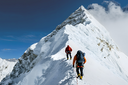
Will I hold everyone up? The question nobody wants to ask out loud
What actually happens when you are the least experienced person in the group
It usually comes near the end of the call.
We have been through the itinerary, the training program, the gear, the altitude. The person on the other end has been asking sharp questions and clearly wants to go. Then there is a pause, and the tone shifts slightly.
“Can I ask you something? What if I am the slowest one?”
Sometimes it is phrased as a fitness question. Sometimes it comes out as a joke. But underneath it is always the same worry: that they will be the weak link, that everyone else will be fitter and more capable, and that they will be the person the group has to stand around waiting for in the cold.
I have been guiding for eleven years, across the Victorian Alps and the Himalayas. I have never once seen this fear play out the way people imagine it will.
The fittest person is rarely the strongest performer
This surprises people, so it is worth stating plainly. On a multi-day trek, and especially at altitude, raw fitness is only one input and it is not the most important one.
I have watched marathon runners get flattened at 4,200 metres while someone fifteen years older, training three times a week, walks past them feeling fine. Altitude tolerance has a strong genetic component and very little to do with how fast you can run 10km at sea level. Being fit makes the walking easier. It does not make you immune to thin air.
The people who do best on hard trips tend to share different traits. They pace themselves properly instead of chasing the front. They eat and drink when they need to, even if they do not feel like it. They look after their feet early. They speak up when something is not right instead of quietly suffering. They keep their head when the weather turns. They stay positive and work as a team player.
None of that is about being the fittest person in the group. Most of it is about temperament and preparation, and both of those are trainable.
A group is not a race
The image people carry in their head is of a line of hikers disappearing over a ridge while they struggle along at the back, alone and embarrassed.
That is not how a well-run group works. It is not how ours work, and if it is how a company you are considering operates, choose a different company.
A guided group moves at a sustainable pace set by the guide, not by the keenest person in the party. On our trips there is always a guide at the front and a guide at the back. Nobody walks alone and nobody gets dropped. The route has flexibility built into it, we adjust the pace, and we plan breaks around the group rather than around a schedule.
There is also a practical point here that gets missed. A group that moves too fast is a group that arrives at camp dehydrated, underfed and cooked, which is exactly how small problems turn into big ones. Slowing down is not a concession to the slowest walker. On a serious trip it is usually the correct decision for everyone.
What actually happens in the group
Here is the part people never predict.
By day three, the group has stopped keeping score. The person who was quietly terrified of holding everyone up has usually become one of the people the group relies on, because they are the one who has been paying attention, checking on others and doing the small things well.
Everyone has a bad day. On a two week trek, everyone. The strongest walker in the group gets a stomach bug at 4,500 metres. The most experienced person turns an ankle. The one who has been leading from the front all week suddenly cannot eat. Once people have carried each other through a few of those moments, the ranking that felt so important on day one stops existing.
The most common feedback I get after a trip is not about the summit. It is about the group.
If you genuinely are the least experienced person in the room
Sometimes it is true. Sometimes you are the newest, the least experienced or the least conditioned person on the trip. That is a completely fine position to be in, and here is how to make it work.
Do the training. This is the big one and it is entirely within your control. Our build-up programs run for six to eight months for a reason. The people who show up having done the work arrive as capable members of the team, regardless of where they started. The people who show up having skipped it are the ones who struggle, and that has nothing to do with natural ability.
Be honest early. Tell your guide what you are worried about before the trip, not on day four when it has become a problem. We can plan around almost anything if we know about it. We can plan around nothing if we find out too late.
Walk your own pace from the very first hour. The single biggest mistake inexperienced trekkers make is trying to keep up with the fastest person on day one, then paying for it for the rest of the week.
I made this mistake on my first mountain ultra trail run – the first leg of the race was up a steep 1400m ascent, and I felt strong and kept up with all these super-fit looking runners. Little did I realise that as I was pretty much red-lining all the way up that climb, the runners around me were going at their comfortable pace. Only one third into the race I was cooked, and fell behind. The last 6 hours of the race felt like hell – I’ll never make that mistake again.
Go slower than feels necessary at the start. You will pass people later.
Get the boring things right. Feet, hydration, food, layers, sleep. The unglamorous fundamentals are what separate a good week from a miserable one, and they require no athletic talent whatsoever.
The fear is doing something useful
I want to be fair to the worry rather than dismiss it, because it is usually a sign of something good. People who ask this question tend to be conscientious. They do not want to let anyone down. They take the commitment seriously. Those are exactly the qualities that make someone a strong member of a team in the mountains.
The mistake is letting the fear make the decision for you. I have lost count of the number of people who spent two or three years thinking about a trip before they finally committed, then finished it and asked why they waited so long.
Nobody arrives ready. That is what the preparation is for.
Registrations are now open for our next wave of trekking and climbing expeditions to the Everest region, with 6-12 months of build-up training included with every trip. Teams of 8-12. Melbourne-based. Every detail considered and included.
If the question in your head is whether you are the right sort of person for it, get in touch and ask me directly. It is my favourite conversation to have.
Book a discovery call