Why voluntary discomfort is one of the most powerful tools available to you
Joe De Sena, the founder of Spartan Race and Death Race, wrote something in his newsletter recently that stopped me mid-scroll.
“Comfort always arrives disguised as progress. We have engineered climate control, endless entertainment, food without effort, and convenience without competence. We have stripped friction out of life while wondering why anxiety, fragility, obesity, and meaninglessness keep rising.”
Joe’s world is mud, barbed wire and people crawling through ice at 4am. That’s not exactly what we do at Mountain Tribe. But the underlying idea is one I return to constantly, because I’ve seen what happens when people voluntarily step into difficulty - and what they bring back from it.
The comfort trap
In his book The Comfort Crisis, journalist and adventurer Michael Easter spent time embedded with some of the world’s last true hunter-gatherers in the Alaskan wilderness, and what he found challenges almost everything modern life tells us about wellbeing.
Easter’s central argument is that humans evolved under conditions of almost constant physical and psychological challenge. Hunting, carrying, climbing, going without. Our nervous systems, our hormones, our psychology - all of it was shaped by difficulty. And now, for the first time in human history, we’ve removed almost all of it.
The result, Easter argues, isn’t contentment. It’s a slow erosion of the very things that make us feel alive. Rising rates of anxiety, depression, chronic pain and what he calls ‘misogi’ deprivation - the absence of meaningful challenge from daily life.
The fix, counterintuitively, is not more comfort. It’s less.
What I’ve seen on the mountain
I’ve guided expeditions for eleven years. I’ve taken people up mountains in Australia and Nepal. And the pattern I see, again and again, has nothing to do with fitness levels or experience.
The people who come back most changed are not always the strongest or the most technically capable. They’re the ones who were genuinely tested - and kept going anyway.
I remember a client on the Everest Base Camp trek, somewhere around Dingboche at 4,400m. He’d been struggling with altitude for two days. Headache, disrupted sleep, appetite gone. He was a successful business owner, used to being in control, used to competence. And here he was, completely humbled by thin air.
He kept going. Slowly. One step at a time. And when we reached base camp, standing at 5,364m with Everest above us, the look on his face wasn’t triumph so much as something quieter. A kind of settled clarity.
That’s not an isolated story. I’ve seen versions of it dozens of times. From people who summited Bogong in winter with snow up to their knees. From people who ground through the final kilometres of a training hike when every instinct was telling them to stop. From people doing their first serious climb who discovered something about themselves they hadn’t found in a boardroom.
The science behind the shift
Easter references a concept in psychology called ‘adversarial growth’ - sometimes known as post-traumatic growth, though it doesn’t require trauma. The research shows that people who voluntarily engage with challenge, particularly physical challenge, consistently report higher levels of life satisfaction, resilience, gratitude and what psychologists call ‘eudaimonic wellbeing’ - the sense that your life has meaning.
This is distinct from hedonic happiness, which is the pleasure of comfort and convenience. Hedonic pleasure fades quickly. Eudaimonic wellbeing - the kind earned through effort and difficulty - tends to compound.
The physiological side of this is equally compelling. Hard physical effort releases a cascade of neurochemicals - endorphins, dopamine, BDNF (brain-derived neurotrophic factor) - that are directly linked to improved mood, sharper cognitive function and reduced anxiety. Not as a side effect. As the primary mechanism.
Your brain, in other words, was built to reward difficulty. We’ve just stopped giving it the chance.
Voluntary suffering vs unavoidable suffering
De Sena puts it plainly: suffering is coming regardless. Storms, loss, illness, setback - hardship finds everyone eventually. The only variable is whether you’ve trained for it.
This is not a dark idea. It’s a practical one.
When you’ve voluntarily put yourself through something hard - when you’ve chosen the steep trail, the early morning in the rain, the loaded pack, the summit you weren’t sure you could reach - you build a reference point. A lived memory of your own capacity.
That reference point doesn’t stay on the mountain. It comes back with you. Into your work, your relationships, the way you respond to pressure. People who have been genuinely tested carry themselves differently. They’re calmer under stress. They make clearer decisions. They’re less rattled by discomfort, because discomfort is no longer unfamiliar.
What Mountain Tribe is actually building
We are not running extreme events for their own sake. The challenge we build into every trek, every training block, every expedition - is deliberate and structured. It’s calibrated to push - not to break.
But I want to be honest about what that means. It means things will get uncomfortable. There will be sessions during Build-Up Training where you genuinely don’t want to be there. There will be moments on the mountain where the summit feels far away and the legs have had enough.
Those moments are not obstacles to the experience. They are the experience.
Easter writes about a concept called ‘misogi’ - drawn from Japanese tradition, it refers to a task so hard you’re not sure you can complete it. Not a goal you’re confident about. Something genuinely uncertain. His argument is that every person needs at least one misogi a year to stay calibrated - to remember what they’re actually capable of.
I think that’s right. And I think the mountain is one of the best places to find it.
The hard things are worth doing
I said this briefly at the end of a recent newsletter and I’ll say it again here, at greater length, because I mean it.
The clarity you find at altitude, the gratitude that comes from suffering through something and reaching the other side, the quiet confidence of knowing you pushed when every instinct said stop - these are not small things. They are the things people talk about for years after.
Not the hotel rooms. Not the Instagram photos. The hard days.
If you’re at a point in your life where you’re looking for something real - a genuine challenge with a structure behind it and a community around you - I’d encourage you to look at what’s ahead on the Mountain Tribe calendar. The Bogong Winter Trek in August. The Himalayan treks and technical climbing expeditions in 2027.
The mountain will always be there. The variable is you.
Book a discovery call

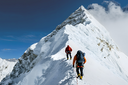
The Case for Doing Hard Things
Why voluntary discomfort is one of the most powerful tools available to you
Joe De Sena, the founder of Spartan Race and Death Race, wrote something in his newsletter recently that stopped me mid-scroll.
“Comfort always arrives disguised as progress. We have engineered climate control, endless entertainment, food without effort, and convenience without competence. We have stripped friction out of life while wondering why anxiety, fragility, obesity, and meaninglessness keep rising.”
Joe’s world is mud, barbed wire and people crawling through ice at 4am. That’s not exactly what we do at Mountain Tribe. But the underlying idea is one I return to constantly, because I’ve seen what happens when people voluntarily step into difficulty - and what they bring back from it.
The comfort trap
In his book The Comfort Crisis, journalist and adventurer Michael Easter spent time embedded with some of the world’s last true hunter-gatherers in the Alaskan wilderness, and what he found challenges almost everything modern life tells us about wellbeing.
Easter’s central argument is that humans evolved under conditions of almost constant physical and psychological challenge. Hunting, carrying, climbing, going without. Our nervous systems, our hormones, our psychology - all of it was shaped by difficulty. And now, for the first time in human history, we’ve removed almost all of it.
The result, Easter argues, isn’t contentment. It’s a slow erosion of the very things that make us feel alive. Rising rates of anxiety, depression, chronic pain and what he calls ‘misogi’ deprivation - the absence of meaningful challenge from daily life.
The fix, counterintuitively, is not more comfort. It’s less.
What I’ve seen on the mountain
I’ve guided expeditions for eleven years. I’ve taken people up mountains in Australia and Nepal. And the pattern I see, again and again, has nothing to do with fitness levels or experience.
The people who come back most changed are not always the strongest or the most technically capable. They’re the ones who were genuinely tested - and kept going anyway.
I remember a client on the Everest Base Camp trek, somewhere around Dingboche at 4,400m. He’d been struggling with altitude for two days. Headache, disrupted sleep, appetite gone. He was a successful business owner, used to being in control, used to competence. And here he was, completely humbled by thin air.
He kept going. Slowly. One step at a time. And when we reached base camp, standing at 5,364m with Everest above us, the look on his face wasn’t triumph so much as something quieter. A kind of settled clarity.
That’s not an isolated story. I’ve seen versions of it dozens of times. From people who summited Bogong in winter with snow up to their knees. From people who ground through the final kilometres of a training hike when every instinct was telling them to stop. From people doing their first serious climb who discovered something about themselves they hadn’t found in a boardroom.
The science behind the shift
Easter references a concept in psychology called ‘adversarial growth’ - sometimes known as post-traumatic growth, though it doesn’t require trauma. The research shows that people who voluntarily engage with challenge, particularly physical challenge, consistently report higher levels of life satisfaction, resilience, gratitude and what psychologists call ‘eudaimonic wellbeing’ - the sense that your life has meaning.
This is distinct from hedonic happiness, which is the pleasure of comfort and convenience. Hedonic pleasure fades quickly. Eudaimonic wellbeing - the kind earned through effort and difficulty - tends to compound.
The physiological side of this is equally compelling. Hard physical effort releases a cascade of neurochemicals - endorphins, dopamine, BDNF (brain-derived neurotrophic factor) - that are directly linked to improved mood, sharper cognitive function and reduced anxiety. Not as a side effect. As the primary mechanism.
Your brain, in other words, was built to reward difficulty. We’ve just stopped giving it the chance.
Voluntary suffering vs unavoidable suffering
De Sena puts it plainly: suffering is coming regardless. Storms, loss, illness, setback - hardship finds everyone eventually. The only variable is whether you’ve trained for it.
This is not a dark idea. It’s a practical one.
When you’ve voluntarily put yourself through something hard - when you’ve chosen the steep trail, the early morning in the rain, the loaded pack, the summit you weren’t sure you could reach - you build a reference point. A lived memory of your own capacity.
That reference point doesn’t stay on the mountain. It comes back with you. Into your work, your relationships, the way you respond to pressure. People who have been genuinely tested carry themselves differently. They’re calmer under stress. They make clearer decisions. They’re less rattled by discomfort, because discomfort is no longer unfamiliar.
What Mountain Tribe is actually building
We are not running extreme events for their own sake. The challenge we build into every trek, every training block, every expedition - is deliberate and structured. It’s calibrated to push - not to break.
But I want to be honest about what that means. It means things will get uncomfortable. There will be sessions during Build-Up Training where you genuinely don’t want to be there. There will be moments on the mountain where the summit feels far away and the legs have had enough.
Those moments are not obstacles to the experience. They are the experience.
Easter writes about a concept called ‘misogi’ - drawn from Japanese tradition, it refers to a task so hard you’re not sure you can complete it. Not a goal you’re confident about. Something genuinely uncertain. His argument is that every person needs at least one misogi a year to stay calibrated - to remember what they’re actually capable of.
I think that’s right. And I think the mountain is one of the best places to find it.
The hard things are worth doing
I said this briefly at the end of a recent newsletter and I’ll say it again here, at greater length, because I mean it.
The clarity you find at altitude, the gratitude that comes from suffering through something and reaching the other side, the quiet confidence of knowing you pushed when every instinct said stop - these are not small things. They are the things people talk about for years after.
Not the hotel rooms. Not the Instagram photos. The hard days.
If you’re at a point in your life where you’re looking for something real - a genuine challenge with a structure behind it and a community around you - I’d encourage you to look at what’s ahead on the Mountain Tribe calendar. The Bogong Winter Trek in August. The Himalayan treks and technical climbing expeditions in 2027.
The mountain will always be there. The variable is you.
Book a discovery call