Fitness won't save you at 5,000m. Understanding your physiology might.
Altitude is the great equaliser.
I've watched marathon runners get flattened at 4,200m while a 58-year-old who trains three times a week strolls past them feeling fine. I've seen strong, capable people reduced to a shuffle by a headache that arrived overnight. And I've had trekkers ask me, halfway up the Khumbu Valley, the question everyone eventually asks: why is this happening to me and not them?
The answer is that altitude doesn't respond to fitness the way a hill does. It responds to physiology, genetics, pacing and preparation. You can't control all of those. But you can control more than most people realise.
What actually happens to your body up high
At sea level, the air you breathe is about 21 per cent oxygen at full atmospheric pressure. As you climb, that percentage stays the same but the pressure drops, which means every breath delivers less oxygen to your blood. At Everest Base Camp (5,364m) you're getting roughly half the oxygen per breath that you get in Melbourne.
Your body notices immediately. Your breathing rate increases, your heart rate climbs and your kidneys start adjusting your blood chemistry. Over days and weeks, deeper changes kick in: your body produces more red blood cells to carry oxygen more efficiently, and your muscles adapt to working with less.
That whole process is acclimatisation. It's your body remodelling itself for a low-oxygen environment, and it's remarkably effective. The catch is that it takes time, and it can't be rushed.
Why the itinerary matters more than your fitness
Acclimatisation happens on a fairly predictable schedule, which is why the golden rules of high-altitude trekking are all about pacing:
• Above 3,000m, increase your sleeping altitude by no more than about 300m per day (some can handle up to 500m/day)
• Build in rest days every 3-4 days, or every 1,000m of elevation gained
• Climb high, sleep low: day walks to higher points followed by a descent to sleep accelerate adaptation
This is why a well-designed itinerary is the single biggest factor in whether you'll feel good at altitude. A trek that rushes to Base Camp in seven days will hurt. One that takes nine or ten, with acclimatisation days built in at Namche Bazaar and Dingboche, gives your body the time it needs. When you compare trekking companies, look at the itinerary before you look at the price. The cheap trip that skips rest days isn't cheap. It's just delaying the cost.
Altitude sickness: what it is and what it isn't
Acute mountain sickness (AMS) is your body's protest at ascending faster than it can adapt. Mild AMS feels like a hangover: headache, poor appetite, disturbed sleep, low energy. It's common, it's manageable and it usually resolves with appropriate rest and elevation gain.
The serious conditions, high-altitude pulmonary oedema (HAPE) and cerebral oedema (HACE), are rare on well-paced treks but dangerous. The cardinal rule for all of it is simple: never ascend with worsening symptoms, and descend if they don't improve. Our guides monitor every trekker daily, and this is one of the areas where experienced guiding earns its keep.
One important point: susceptibility to AMS has a strong genetic component and very little to do with fitness. Being fit makes the trekking easier. It does not make you resistant to altitude. Some of the worst AMS cases on record are elite athletes who climbed too fast because they could.
What you can do before you leave Australia
You can't fully acclimatise at sea level, but you can arrive in the best possible position.
Build a big aerobic base. Acclimatisation aside, a strong cardiovascular system means you're working at a lower percentage of your capacity at any given altitude. Everything feels easier, you recover faster and your body has more headroom to handle the adaptation load. This is the core of our build-up training programs, and it's a six-month+ project, not a six-week one.
Consider altitude exposure, with realistic expectations. Altitude training rooms and simulated altitude sessions are increasingly available in Australian cities. The evidence says a single session has educational value, you learn what breathlessness at altitude feels like, but real physiological benefit requires 2-3 sessions per week over 6-8 continuous weeks. If you can commit to that in the final two months before departure, it's worth considering. One or two sessions won't move the needle.
Talk to your doctor about acetazolamide (Diamox). It's the best-studied medication for AMS prevention and works by speeding up the acclimatisation process itself. Many trekkers carry it as a preventative or a backup. This is a conversation for your GP or a travel medicine specialist, ideally at a dedicated high-altitude medical screening, which every Mountain Tribe Himalayan participant completes.
A note on supplements: ginkgo biloba was popular for AMS prevention for years, but current Wilderness Medical Society guidelines no longer recommend it, as the evidence didn't hold up. Ibuprofen is now the preferred non-prescription alternative for those who can't take acetazolamide, again, something to discuss with your doctor rather than self-prescribe.
What you can do on the trek itself
• Walk slowly. Slower than feels natural. The Nepali phrase 'bistari, bistari' (slowly, slowly) is the best trekking advice ever given
• Hydrate properly, with electrolytes and minerals, not just plain water. Dehydration mimics and worsens AMS
• Eat, even when your appetite fades. Your body is working overtime and needs fuel
• Skip the alcohol until you're back below 3,000m
• Tell your guide how you're feeling, honestly, every day. Small problems at altitude stay small when they're caught early
The bottom line
Altitude rewards patience and preparation, and punishes ego. The trekkers who thrive at 5,000m aren't the fittest ones. They're the ones who trained consistently for months, arrived healthy, walked slowly, drank properly and trusted the process.
That's exactly how we build our Himalayan programs. Six to twelve months of structured training, high-altitude medical screening, itineraries designed around acclimatisation science and guides who watch every trekker like a hawk. It's why our summit success rate sits at 98 per cent.
Applications are now open for our late-2027 Everest Base Camp & Kala Patar Trek, Everest Base Camp & 3 Passes Trek and Everest Base Camp & Gokyo Lakes Trek. Each trek includes the full build-up training program. If the Himalayas are calling, the preparation starts now.
Book a discovery call

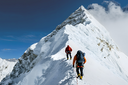
How Altitude Acclimatisation Actually Works (and what you can do to improve your chances)
Fitness won't save you at 5,000m. Understanding your physiology might.
Altitude is the great equaliser.
I've watched marathon runners get flattened at 4,200m while a 58-year-old who trains three times a week strolls past them feeling fine. I've seen strong, capable people reduced to a shuffle by a headache that arrived overnight. And I've had trekkers ask me, halfway up the Khumbu Valley, the question everyone eventually asks: why is this happening to me and not them?
The answer is that altitude doesn't respond to fitness the way a hill does. It responds to physiology, genetics, pacing and preparation. You can't control all of those. But you can control more than most people realise.
What actually happens to your body up high
At sea level, the air you breathe is about 21 per cent oxygen at full atmospheric pressure. As you climb, that percentage stays the same but the pressure drops, which means every breath delivers less oxygen to your blood. At Everest Base Camp (5,364m) you're getting roughly half the oxygen per breath that you get in Melbourne.
Your body notices immediately. Your breathing rate increases, your heart rate climbs and your kidneys start adjusting your blood chemistry. Over days and weeks, deeper changes kick in: your body produces more red blood cells to carry oxygen more efficiently, and your muscles adapt to working with less.
That whole process is acclimatisation. It's your body remodelling itself for a low-oxygen environment, and it's remarkably effective. The catch is that it takes time, and it can't be rushed.
Why the itinerary matters more than your fitness
Acclimatisation happens on a fairly predictable schedule, which is why the golden rules of high-altitude trekking are all about pacing:
• Above 3,000m, increase your sleeping altitude by no more than about 300m per day (some can handle up to 500m/day)
• Build in rest days every 3-4 days, or every 1,000m of elevation gained
• Climb high, sleep low: day walks to higher points followed by a descent to sleep accelerate adaptation
This is why a well-designed itinerary is the single biggest factor in whether you'll feel good at altitude. A trek that rushes to Base Camp in seven days will hurt. One that takes nine or ten, with acclimatisation days built in at Namche Bazaar and Dingboche, gives your body the time it needs. When you compare trekking companies, look at the itinerary before you look at the price. The cheap trip that skips rest days isn't cheap. It's just delaying the cost.
Altitude sickness: what it is and what it isn't
Acute mountain sickness (AMS) is your body's protest at ascending faster than it can adapt. Mild AMS feels like a hangover: headache, poor appetite, disturbed sleep, low energy. It's common, it's manageable and it usually resolves with appropriate rest and elevation gain.
The serious conditions, high-altitude pulmonary oedema (HAPE) and cerebral oedema (HACE), are rare on well-paced treks but dangerous. The cardinal rule for all of it is simple: never ascend with worsening symptoms, and descend if they don't improve. Our guides monitor every trekker daily, and this is one of the areas where experienced guiding earns its keep.
One important point: susceptibility to AMS has a strong genetic component and very little to do with fitness. Being fit makes the trekking easier. It does not make you resistant to altitude. Some of the worst AMS cases on record are elite athletes who climbed too fast because they could.
What you can do before you leave Australia
You can't fully acclimatise at sea level, but you can arrive in the best possible position.
Build a big aerobic base. Acclimatisation aside, a strong cardiovascular system means you're working at a lower percentage of your capacity at any given altitude. Everything feels easier, you recover faster and your body has more headroom to handle the adaptation load. This is the core of our build-up training programs, and it's a six-month+ project, not a six-week one.
Consider altitude exposure, with realistic expectations. Altitude training rooms and simulated altitude sessions are increasingly available in Australian cities. The evidence says a single session has educational value, you learn what breathlessness at altitude feels like, but real physiological benefit requires 2-3 sessions per week over 6-8 continuous weeks. If you can commit to that in the final two months before departure, it's worth considering. One or two sessions won't move the needle.
Talk to your doctor about acetazolamide (Diamox). It's the best-studied medication for AMS prevention and works by speeding up the acclimatisation process itself. Many trekkers carry it as a preventative or a backup. This is a conversation for your GP or a travel medicine specialist, ideally at a dedicated high-altitude medical screening, which every Mountain Tribe Himalayan participant completes.
A note on supplements: ginkgo biloba was popular for AMS prevention for years, but current Wilderness Medical Society guidelines no longer recommend it, as the evidence didn't hold up. Ibuprofen is now the preferred non-prescription alternative for those who can't take acetazolamide, again, something to discuss with your doctor rather than self-prescribe.
What you can do on the trek itself
• Walk slowly. Slower than feels natural. The Nepali phrase 'bistari, bistari' (slowly, slowly) is the best trekking advice ever given
• Hydrate properly, with electrolytes and minerals, not just plain water. Dehydration mimics and worsens AMS
• Eat, even when your appetite fades. Your body is working overtime and needs fuel
• Skip the alcohol until you're back below 3,000m
• Tell your guide how you're feeling, honestly, every day. Small problems at altitude stay small when they're caught early
The bottom line
Altitude rewards patience and preparation, and punishes ego. The trekkers who thrive at 5,000m aren't the fittest ones. They're the ones who trained consistently for months, arrived healthy, walked slowly, drank properly and trusted the process.
That's exactly how we build our Himalayan programs. Six to twelve months of structured training, high-altitude medical screening, itineraries designed around acclimatisation science and guides who watch every trekker like a hawk. It's why our summit success rate sits at 98 per cent.
Applications are now open for our late-2027 Everest Base Camp & Kala Patar Trek, Everest Base Camp & 3 Passes Trek and Everest Base Camp & Gokyo Lakes Trek. Each trek includes the full build-up training program. If the Himalayas are calling, the preparation starts now.
Book a discovery call