I didn't allow myself to think about failure. Not once. In the months of preparation leading into the Alpine Challenge 160 - a 160 kilometre mountain ultra marathon through the Victorian High Country - I had one scenario in my head, and one scenario only. I would start. I would suffer. I would finish.
I didn't finish. And what unravelled in the days that followed turned out to be one of the most clarifying experiences of my life.
The Build-Up
The seed was planted in late 2025. I gave myself roughly four months to prepare - not a lot of time for a race of this distance by most standards, but I felt the foundation was there. Years of guiding in the Victorian Alps and the Himalayas, a moderate running base, and a deep familiarity with the High Country terrain gave me confidence that the jump was possible, if not comfortable.
Training went well. In February, I completed the Mountain Tribe Three Peaks Ultra – 80km across three mountains with short breaks between each leg. It wasn't 80 consecutive kilometres, but it told me a lot about where my body was at. I came through it well. In March, I ran the Buffalo Stampede 42km as a final sharpener. That felt strong too.
As the race approached, I shifted from my original plan of completing the 100 km race - I felt that the 100k was actually underselling what I was capable of. So I made the call - I'd go for the 160.
Nutrition was dialled in: homemade fruit jerky, fresh fruit at aid stations when available, baby food sachets for easy calories in the later stages, and glucose syrup. Hydration was sorted too - I'd been working with Sodii electrolytes and had discovered the unflavoured version was a quiet weapon in the later hours, when flavoured anything becomes nauseating and your body just wants clean, simple minerals. Everything felt right.
The longest consecutive distance I'd done in training was 60km. This was going to be a significant leap. I knew that. But I also knew the mountains, I trusted my body, and I had a crew I trusted completely.
When the Weather Rewrote the Plan
In the days leading up to the race, the forecast shifted. Cold conditions. A strong chance of snow. Heavy winds across the exposed High Country ridgelines. The organisers made the call to cancel the 160km and 100km events - a decision I respect completely. When you're responsible for hundreds of people in remote alpine terrain in those conditions, you make the conservative call. That's what good leadership looks like.
But I wasn't done.
I sat down with my crew - Chris, Aimee, and Serge - three close friends who had committed their weekend to supporting me through this thing. We talked through it honestly: the conditions, the risks, what I was capable of, what could go wrong. I've spent over a decade making exactly these kinds of judgement calls as a guide. I understand cold weather physiology, I know how to read deteriorating conditions, and I know how to respond quickly when the body starts to lose the battle against the elements. We decided to go ahead - privately, with full support, using my Garmin inReach to send regular automated check-ins so the crew always knew I was moving and when to expect me at each resupply point.
We had a plan. Several contingency plans. And at 4:30am on a Saturday morning, I started running.
Into the Dark and the Cold
The conditions at the start were rotten. Cold, windy, and raining. I told myself it would ease.
It didn't.
About 30-45 minutes in, the light rain turned to hail. The trail through Rocky Valley was wet, steep, and slippery - nothing like the fast, flowing terrain you want at the start of a 160km effort. I managed it. I kept moving.
At the 23km mark, Warby Corner, I met Chris. He'd ridden out on his bicycle to resupply me and check in. It was bitterly cold and exposed out there, and we didn't linger. I topped up and headed north, dropping down to Big River before the long climb the other side.
The trail was empty. The whole High Country felt like it belonged to no one. Down at the river crossing I passed two hikers - the only people I'd see for hours. There's something about that kind of solitude that's hard to explain to someone who hasn't experienced it. When you're deep in a remote landscape, moving under your own power, with weather pressing in from all sides - it focuses you in a way nothing else can. Every thought that isn't immediately useful falls away. You become entirely present.
I reached Cleve Cole Hut, checked in with the crew on the InReach, and was honest with them: I was moving slower than planned. My muscles and joints were seizing in the cold. Not unusual in these conditions - but it was costing me time and energy I'd need later.
Then came Bogong.
The Summit That Changed Everything
Crossing the summit of Mount Bogong in those conditions was the defining moment of the day. An hour or more on fully exposed terrain, with winds I'd estimate at 70-80 kilometres per hour, snow coming and going, visibility fading. Every step demanded precision. On terrain like that, in those conditions, a single wrong placement of the foot - a rolled ankle, a slip on wet rock - isn't just an inconvenience. It's a cascading risk that can turn serious very quickly.
I was completely alone up there, and I was completely focused. There's a meditative quality to movement in the mountains that I don't think can be replicated anywhere else. When the stakes are real and the environment is unforgiving, your mind becomes utterly clear. No noise, no distraction, no performance - just the terrain and the next step.
In hindsight, crossing Bogong that morning is one of the moments I'm most proud of. At the time, it just bled through energy at a rate I hadn't fully planned for. I remember the words I kept repeating to myself up there – “stay focused, stay calm, keep moving…stay focused, stay calm, keep moving”.
By the time I descended down to Big River, my right knee felt pretty fried….and my left ankle. The cold was getting into the joints in a way that was slowing my gait - not injury exactly, but the body tightening around itself in self-protection. I kept moving. What else do you do?
The Decision
I reached Warby Corner again at around 6:30pm - the 65km mark. I was well past my expected time. The crew was waiting – good friends they are – they’d been huddling together in the bitterly cold wind for over an hour waiting for me. As soon as I arrived they jumped into action – Aimee lay me down on an emergency blanket, wrapping it around me. Down jacket on, and then wrapped herself around me while Chris passed me food and liquid, then re-stocked my running vest. Serge threw more layers over me then hugged my legs to help warm me up. We then had an honest conversation about where we were at.
The next checkpoint was Cope Hut at the 80km mark - about 15km away, now in full darkness, with snow picking up and visibility dropping. We discussed how the 160km target was highly unlikely given the conditions and my speed. We’d aim for 100km. I took off towards Cope Hut and the crew headed back to Falls Creek to eat and rest while I knocked out those kilometres alone.
Those 15 kilometres were the hardest of the day. Darkness. Snow. Wind. Soaking wet feet. A headtorch that illuminated nothing but a wall of white as the light reflected off the falling flakes. If you've never moved at night in snowfall with a headtorch, I'll describe it for you: you see approximately one metre ahead, surrounded entirely by swirling white. It's disorienting in a way that doesn't fully register until you're in it.
And I was slow. The knee, the ankle, the cold, the accumulated fatigue of 65+ kilometres - it had all compressed into a body that was doing everything it could just to keep moving forward.
I reached Cleve Cole Hut at around 10.15pm. The 80km mark.
The next section would have taken me across to pole 333 and on toward Hotham - exposed terrain, no shelter, no crew support for 20km. Serge had been prepared to come with me through that stretch. But sitting in the crew vehicle next to Cope Hut, working through the numbers and the conditions with clear eyes, I knew what the right call was.
We pulled the pin at 10:30pm.
The Aftermath Nobody Talks About
What happened next surprised me - and I say that as someone who has made the call to turn back on safety grounds many times as a guide.
When I'm guiding and we need to retreat, I find it relatively straightforward. The emotion largely steps aside. I have a responsibility to the people in my care, and that responsibility anchors the decision. Logic takes over.
This was different.
In the hours after stopping, and for days that followed, I was torn apart by doubt. Had I made the right call, or had I taken the easy way out? Was I actually in danger, or had I just run out of will? I had been so certain - so completely, stubbornly certain - that I was going to finish this race. I hadn't entertained another outcome. And when the outcome turned out to be something else entirely, I didn't know what to do with that.
I questioned my training. I questioned my experience. I questioned whether the version of myself I thought I was - capable, resilient, prepared - was actually real, or just a story I'd been telling myself.
That's a hard place to sit. And I sat in it for a few days.
Slowly, perspective returned. Chris, Aimee, and Serge were consistent: the decision was right. The conditions were objectively severe. Eighty kilometres in weather that had already cancelled the organised event for hundreds of other athletes is not failure. It's a result.
But more than their reassurance, what helped most was returning to why I was there in the first place.
What the Mountains Actually Give You
I didn't go into that race to prove something to anyone else. I went because the mountains give me something I can't find anywhere else - and I think that's true for a lot of people, whether they know it yet or not.
There is a physical dimension to it, yes. The fitness, the training, the testing of what the body can do. But that's almost the least of it.
When I was crossing the summit of Bogong in 80km/h winds, alone, in the dark and the snow, knowing that every footfall mattered - I wasn't thinking about my career, my business, my phone, my schedule, my to-do list. I was thinking about exactly one thing: the ground beneath my feet and the path ahead. That's it. Everything else in life is noise. In the mountains, and especially in extreme conditions, all the noise stops.
That's not just relief. That's clarity. And I believe it's something our modern lives make genuinely rare and genuinely necessary.
The mountains also have a way of showing you who you are with terrifying honesty. Not who you think you are, or who you perform yourself to be - who you actually are, when stripped back to the essentials. When you're deep in fatigue, making decisions that matter, in conditions that don't care about your best-laid plans - that's when you meet yourself properly.
What I found in those 80 kilometres was that I'm more resilient than I'd been tested before. That I can stay calm and make sound decisions when the environment is trying hard to overwhelm me. That I have a genuine, bottomless love for this kind of terrain and this kind of challenge. And that I am deeply, unreservedly grateful - for the mountains, for the wild beauty of the Victorian High Country, for a body that carried me 80 kilometres through a storm, and for three friends who gave up their weekend to sit in a cold car at the end of lonely fire trails so I could chase something that mattered to me.
This planet is extraordinary. The natural world - especially the high alpine world - holds a kind of wonder that no screen, no city, no constructed experience can replicate. The expanse of it. The indifference of it. The way it reduces you to exactly your right size. I never take that for granted, and I never want to.
What Comes Next
The Alpine Challenge 160 isn't done with me yet. I'll be back.
But beyond that specific race, this experience reinforced something I feel every time I guide a client to a summit or watch someone complete a training hike they weren't sure they could do: the mountains are for everyone who is willing to prepare, to be humbled, and to keep showing up.
You don't need to be extraordinary. You need to be committed.
The limits you find out there - the physical ones, the mental ones, the ones that bring up emotions you didn't expect - those aren't signs you shouldn't be there. They're the whole point. They're where the growth lives. They're what you carry back down with you and into the rest of your life.
Go find yours.
Book a discovery call

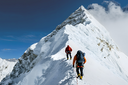
Eighty Kilometres into the Dark: What a Mountain Ultra Taught Me About Limits, Letting Go, and Why I Keep Coming Back
I didn't allow myself to think about failure. Not once. In the months of preparation leading into the Alpine Challenge 160 - a 160 kilometre mountain ultra marathon through the Victorian High Country - I had one scenario in my head, and one scenario only. I would start. I would suffer. I would finish.
I didn't finish. And what unravelled in the days that followed turned out to be one of the most clarifying experiences of my life.
The Build-Up
The seed was planted in late 2025. I gave myself roughly four months to prepare - not a lot of time for a race of this distance by most standards, but I felt the foundation was there. Years of guiding in the Victorian Alps and the Himalayas, a moderate running base, and a deep familiarity with the High Country terrain gave me confidence that the jump was possible, if not comfortable.
Training went well. In February, I completed the Mountain Tribe Three Peaks Ultra – 80km across three mountains with short breaks between each leg. It wasn't 80 consecutive kilometres, but it told me a lot about where my body was at. I came through it well. In March, I ran the Buffalo Stampede 42km as a final sharpener. That felt strong too.
As the race approached, I shifted from my original plan of completing the 100 km race - I felt that the 100k was actually underselling what I was capable of. So I made the call - I'd go for the 160.
Nutrition was dialled in: homemade fruit jerky, fresh fruit at aid stations when available, baby food sachets for easy calories in the later stages, and glucose syrup. Hydration was sorted too - I'd been working with Sodii electrolytes and had discovered the unflavoured version was a quiet weapon in the later hours, when flavoured anything becomes nauseating and your body just wants clean, simple minerals. Everything felt right.
The longest consecutive distance I'd done in training was 60km. This was going to be a significant leap. I knew that. But I also knew the mountains, I trusted my body, and I had a crew I trusted completely.
When the Weather Rewrote the Plan
In the days leading up to the race, the forecast shifted. Cold conditions. A strong chance of snow. Heavy winds across the exposed High Country ridgelines. The organisers made the call to cancel the 160km and 100km events - a decision I respect completely. When you're responsible for hundreds of people in remote alpine terrain in those conditions, you make the conservative call. That's what good leadership looks like.
But I wasn't done.
I sat down with my crew - Chris, Aimee, and Serge - three close friends who had committed their weekend to supporting me through this thing. We talked through it honestly: the conditions, the risks, what I was capable of, what could go wrong. I've spent over a decade making exactly these kinds of judgement calls as a guide. I understand cold weather physiology, I know how to read deteriorating conditions, and I know how to respond quickly when the body starts to lose the battle against the elements. We decided to go ahead - privately, with full support, using my Garmin inReach to send regular automated check-ins so the crew always knew I was moving and when to expect me at each resupply point.
We had a plan. Several contingency plans. And at 4:30am on a Saturday morning, I started running.
Into the Dark and the Cold
The conditions at the start were rotten. Cold, windy, and raining. I told myself it would ease.
It didn't.
About 30-45 minutes in, the light rain turned to hail. The trail through Rocky Valley was wet, steep, and slippery - nothing like the fast, flowing terrain you want at the start of a 160km effort. I managed it. I kept moving.
At the 23km mark, Warby Corner, I met Chris. He'd ridden out on his bicycle to resupply me and check in. It was bitterly cold and exposed out there, and we didn't linger. I topped up and headed north, dropping down to Big River before the long climb the other side.
The trail was empty. The whole High Country felt like it belonged to no one. Down at the river crossing I passed two hikers - the only people I'd see for hours. There's something about that kind of solitude that's hard to explain to someone who hasn't experienced it. When you're deep in a remote landscape, moving under your own power, with weather pressing in from all sides - it focuses you in a way nothing else can. Every thought that isn't immediately useful falls away. You become entirely present.
I reached Cleve Cole Hut, checked in with the crew on the InReach, and was honest with them: I was moving slower than planned. My muscles and joints were seizing in the cold. Not unusual in these conditions - but it was costing me time and energy I'd need later.
Then came Bogong.
The Summit That Changed Everything
Crossing the summit of Mount Bogong in those conditions was the defining moment of the day. An hour or more on fully exposed terrain, with winds I'd estimate at 70-80 kilometres per hour, snow coming and going, visibility fading. Every step demanded precision. On terrain like that, in those conditions, a single wrong placement of the foot - a rolled ankle, a slip on wet rock - isn't just an inconvenience. It's a cascading risk that can turn serious very quickly.
I was completely alone up there, and I was completely focused. There's a meditative quality to movement in the mountains that I don't think can be replicated anywhere else. When the stakes are real and the environment is unforgiving, your mind becomes utterly clear. No noise, no distraction, no performance - just the terrain and the next step.
In hindsight, crossing Bogong that morning is one of the moments I'm most proud of. At the time, it just bled through energy at a rate I hadn't fully planned for. I remember the words I kept repeating to myself up there – “stay focused, stay calm, keep moving…stay focused, stay calm, keep moving”.
By the time I descended down to Big River, my right knee felt pretty fried….and my left ankle. The cold was getting into the joints in a way that was slowing my gait - not injury exactly, but the body tightening around itself in self-protection. I kept moving. What else do you do?
The Decision
I reached Warby Corner again at around 6:30pm - the 65km mark. I was well past my expected time. The crew was waiting – good friends they are – they’d been huddling together in the bitterly cold wind for over an hour waiting for me. As soon as I arrived they jumped into action – Aimee lay me down on an emergency blanket, wrapping it around me. Down jacket on, and then wrapped herself around me while Chris passed me food and liquid, then re-stocked my running vest. Serge threw more layers over me then hugged my legs to help warm me up. We then had an honest conversation about where we were at.
The next checkpoint was Cope Hut at the 80km mark - about 15km away, now in full darkness, with snow picking up and visibility dropping. We discussed how the 160km target was highly unlikely given the conditions and my speed. We’d aim for 100km. I took off towards Cope Hut and the crew headed back to Falls Creek to eat and rest while I knocked out those kilometres alone.
Those 15 kilometres were the hardest of the day. Darkness. Snow. Wind. Soaking wet feet. A headtorch that illuminated nothing but a wall of white as the light reflected off the falling flakes. If you've never moved at night in snowfall with a headtorch, I'll describe it for you: you see approximately one metre ahead, surrounded entirely by swirling white. It's disorienting in a way that doesn't fully register until you're in it.
And I was slow. The knee, the ankle, the cold, the accumulated fatigue of 65+ kilometres - it had all compressed into a body that was doing everything it could just to keep moving forward.
I reached Cleve Cole Hut at around 10.15pm. The 80km mark.
The next section would have taken me across to pole 333 and on toward Hotham - exposed terrain, no shelter, no crew support for 20km. Serge had been prepared to come with me through that stretch. But sitting in the crew vehicle next to Cope Hut, working through the numbers and the conditions with clear eyes, I knew what the right call was.
We pulled the pin at 10:30pm.
The Aftermath Nobody Talks About
What happened next surprised me - and I say that as someone who has made the call to turn back on safety grounds many times as a guide.
When I'm guiding and we need to retreat, I find it relatively straightforward. The emotion largely steps aside. I have a responsibility to the people in my care, and that responsibility anchors the decision. Logic takes over.
This was different.
In the hours after stopping, and for days that followed, I was torn apart by doubt. Had I made the right call, or had I taken the easy way out? Was I actually in danger, or had I just run out of will? I had been so certain - so completely, stubbornly certain - that I was going to finish this race. I hadn't entertained another outcome. And when the outcome turned out to be something else entirely, I didn't know what to do with that.
I questioned my training. I questioned my experience. I questioned whether the version of myself I thought I was - capable, resilient, prepared - was actually real, or just a story I'd been telling myself.
That's a hard place to sit. And I sat in it for a few days.
Slowly, perspective returned. Chris, Aimee, and Serge were consistent: the decision was right. The conditions were objectively severe. Eighty kilometres in weather that had already cancelled the organised event for hundreds of other athletes is not failure. It's a result.
But more than their reassurance, what helped most was returning to why I was there in the first place.
What the Mountains Actually Give You
I didn't go into that race to prove something to anyone else. I went because the mountains give me something I can't find anywhere else - and I think that's true for a lot of people, whether they know it yet or not.
There is a physical dimension to it, yes. The fitness, the training, the testing of what the body can do. But that's almost the least of it.
When I was crossing the summit of Bogong in 80km/h winds, alone, in the dark and the snow, knowing that every footfall mattered - I wasn't thinking about my career, my business, my phone, my schedule, my to-do list. I was thinking about exactly one thing: the ground beneath my feet and the path ahead. That's it. Everything else in life is noise. In the mountains, and especially in extreme conditions, all the noise stops.
That's not just relief. That's clarity. And I believe it's something our modern lives make genuinely rare and genuinely necessary.
The mountains also have a way of showing you who you are with terrifying honesty. Not who you think you are, or who you perform yourself to be - who you actually are, when stripped back to the essentials. When you're deep in fatigue, making decisions that matter, in conditions that don't care about your best-laid plans - that's when you meet yourself properly.
What I found in those 80 kilometres was that I'm more resilient than I'd been tested before. That I can stay calm and make sound decisions when the environment is trying hard to overwhelm me. That I have a genuine, bottomless love for this kind of terrain and this kind of challenge. And that I am deeply, unreservedly grateful - for the mountains, for the wild beauty of the Victorian High Country, for a body that carried me 80 kilometres through a storm, and for three friends who gave up their weekend to sit in a cold car at the end of lonely fire trails so I could chase something that mattered to me.
This planet is extraordinary. The natural world - especially the high alpine world - holds a kind of wonder that no screen, no city, no constructed experience can replicate. The expanse of it. The indifference of it. The way it reduces you to exactly your right size. I never take that for granted, and I never want to.
What Comes Next
The Alpine Challenge 160 isn't done with me yet. I'll be back.
But beyond that specific race, this experience reinforced something I feel every time I guide a client to a summit or watch someone complete a training hike they weren't sure they could do: the mountains are for everyone who is willing to prepare, to be humbled, and to keep showing up.
You don't need to be extraordinary. You need to be committed.
The limits you find out there - the physical ones, the mental ones, the ones that bring up emotions you didn't expect - those aren't signs you shouldn't be there. They're the whole point. They're where the growth lives. They're what you carry back down with you and into the rest of your life.
Go find yours.
Book a discovery call